

EXERCISE AND AGING
- quickfitbeauty
- Oct 26, 2021
- 2 min read
Updated: May 27, 2022
When you regularly exercise throughout adulthood, it helps protect your muscles against age-related deterioration.
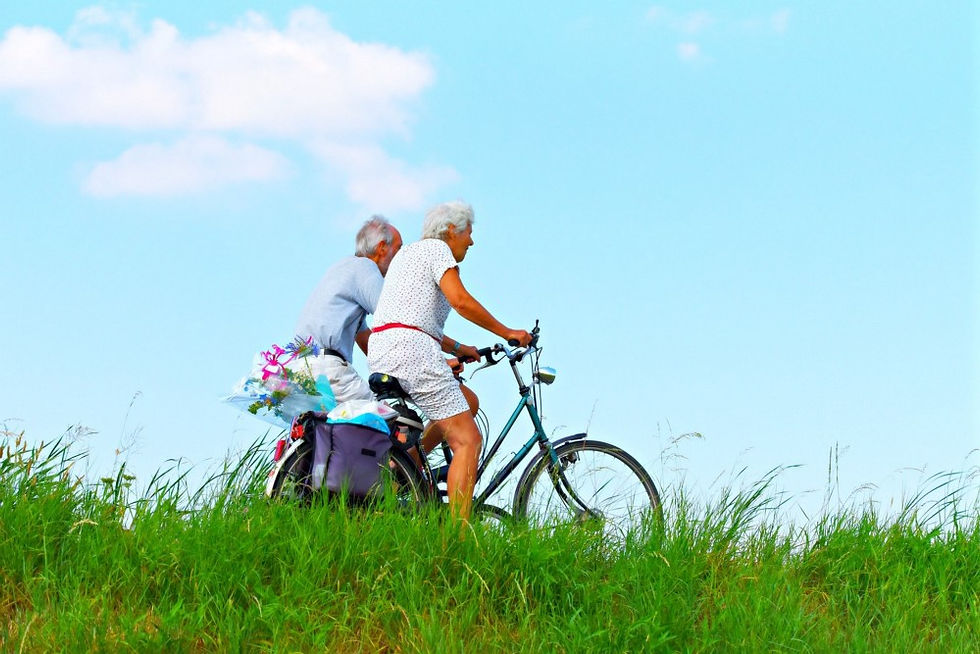
Did you know exercise fights ageing?
When you regularly exercise throughout adulthood, it helps protect your muscles against age-related deterioration. A study titled Effects of aging and lifelong aerobic exercise on basal and exercise-induced inflammation found that the muscles of active older men resemble those of 25-year-olds at a cellular level.
Another study done by researchers at the University of Birmingham and Kings College compared a group of older people who’ve been active all their lives to a group of older and younger adults who didn’t exercise regularly. Their study showed that those who exercised regularly defied the ageing process because they had the immunity, muscle mass and cholesterol levels of a young body.
How might exercise affect aging?
As we age, we lose muscle mass, our immune system becomes weaker and a whole array of physical ailments follows. However, in those who exercise regularly, the loss of muscle mass slows down at a cellular level because the body is technically fooled into believing that it is young, since it is able to maintain a similar vigor to a younger person’s body.
Telomeres (end of chromosomes) shrink as we get older, which leads to vascular aging (arteries and blood vessels aren’t as strong and pumping as they were before) but with exercise, we can see a “two-fold” increase in their length.
What does decreased muscle mass do to our bodies?
It increases the risk for falls and fractures because our body is weaker and so it becomes not used to simple movements in old age, especially if it was accustomed to a sedentary lifestyle. However, through exercise, you can have the body “remember” and “adjust” to movement.
In Japan, a country with a high life expectancy, it is not uncommon to find the elderly still moving — hiking, walking or biking. When I first arrived in Japan, I decided to climb Mount Takao and each time I stopped to take a break, I would turn to my left and see an elderly person briskly walk past me up the mountain like it was nothing. Nothing gets you motivated like seeing the elderly more active than you. That’s when I thought this must have something to do with Japan’s long life expectancy.
What type of exercise should I do to slow the ageing process?
All exercises are beneficial but not all exercises are created equal.
Endurance training and HIIT (high-intensity interval training) are two of the most beneficial types of exercises to slow down ageing because they help keep your heart rate up and keep your cells performing as if they were in a younger body.
These two forms of exercise are best to maintain longer telomeres which help slow down vascular ageing by keeping our veins in better shape and less at risk for heart disease and stroke.
However, resistance training (weightlifting) is important also. It helps maintain stronger muscles and prevent fractures, falls and osteoporosis (bone weakening).


Comments